


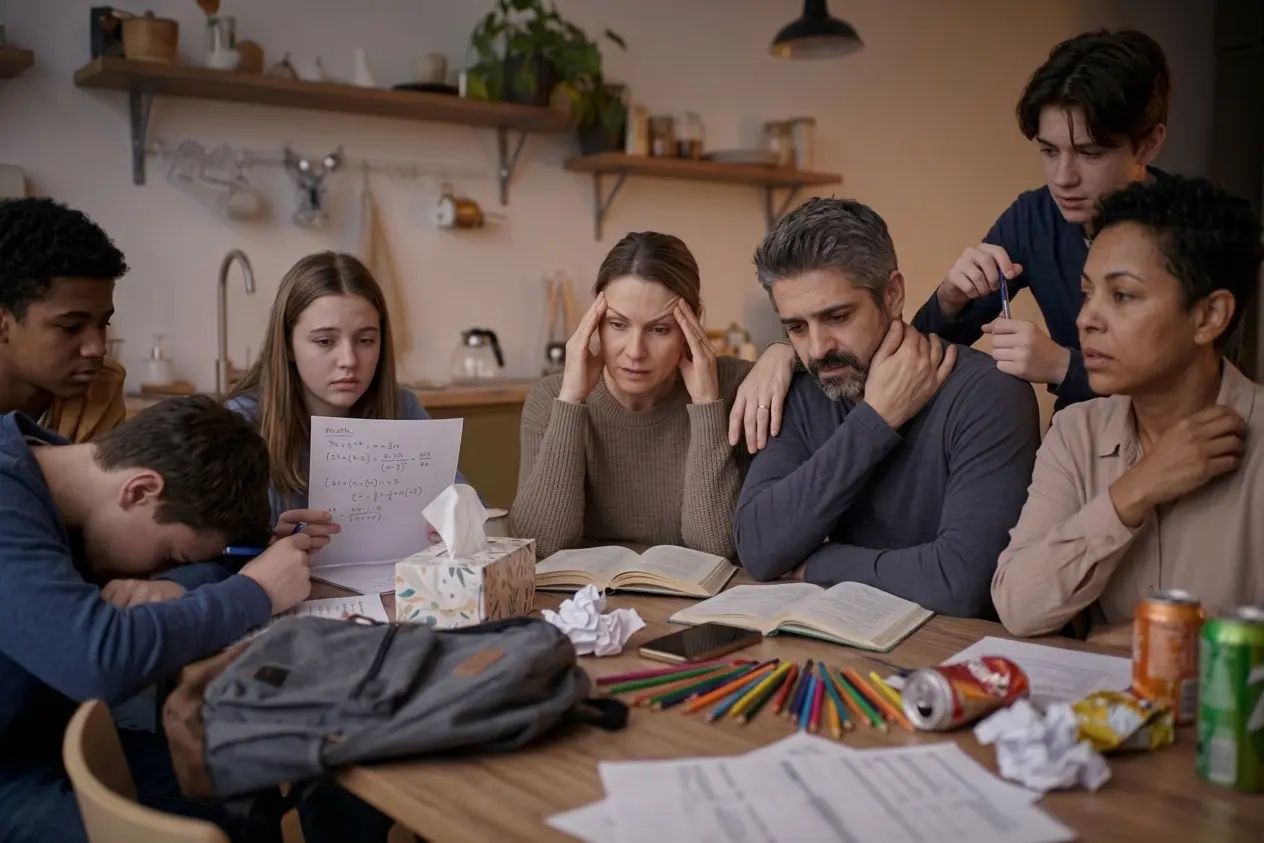
Anxiety in teenagers is more than occasional stress before a test, game, audition, or difficult conversation. Teen anxiety becomes a concern when worry, fear, avoidance, or physical tension starts interfering with school, sleep, friendships, family life, or everyday confidence. Understanding teenage anxiety symptoms, the common causes of anxiety in teens, and the strategies that can help is an important part of supporting adolescent well-being. You might also be wondering about how to find Teen Counseling Palm Beach, FL for your teen. This guide explains common causes of teen anxiety, what signs to watch for, and practical solutions parents, caregivers, educators, and teens can use to support healthier teenage mental health.
What does anxiety in teenagers actually look like?
Anxiety in teenagers often shows up as a mix of emotional, physical, behavioral, and academic changes, not just visible nervousness. A teen may seem irritable, withdrawn, perfectionistic, tired, overwhelmed, or unusually avoidant, even when they cannot clearly explain what feels wrong. When symptoms last for weeks or months and disrupt life at home, at school, or with friends, the National Institute of Mental Health recommends contacting a health professional. (nimh.nih.gov)
Teen anxiety can be easy to miss because adolescence already comes with mood shifts, privacy, identity development, and pressure to fit in. A teenager who says “I’m fine” may still be experiencing racing thoughts, stomachaches, dread, or fear of disappointing others. Some teens become quiet and compliant, while others argue, procrastinate, refuse school, or seem angry when they are actually scared.
Common signs can include:
- Excessive worry about grades, friendships, health, safety, appearance, performance, or the future.
- Trouble controlling worry, even after reassurance.
- Irritability, restlessness, or feeling constantly “on edge.”
- Difficulty concentrating, making decisions, or finishing work.
- Sleep problems, including trouble falling asleep or waking during the night.
- Physical symptoms such as headaches, stomachaches, muscle tension, sweating, shakiness, shortness of breath, or fatigue.
- Avoidance of school, social events, driving, sports, presentations, tests, or new situations.
- Repeated requests for reassurance from parents, teachers, coaches, or friends.
- Perfectionism, overstudying, rewriting assignments, or panic when mistakes happen.
The key is not whether a teen feels anxious sometimes. Anxiety is a normal human response to uncertainty or threat. The concern is intensity, duration, and impairment: how big the worry gets, how long it lasts, and how much it limits the teen’s life.
Normal stress and anxiety disorders are not the same
Every teenager experiences stress. A hard class, college applications, social conflict, family changes, or a packed schedule can make anyone tense. Healthy stress usually rises around a specific challenge and eases when the challenge passes. Anxiety becomes more serious when the alarm system stays switched on, even when the situation is manageable or no immediate danger exists.
An anxiety disorder is not a personality flaw or a lack of discipline. It is a mental health condition that can affect thoughts, feelings, body sensations, and behavior. NIMH notes that generalized anxiety disorder may involve excessive everyday worry, trouble relaxing, concentration problems, sleep disruption, irritability, and physical discomfort; treatment commonly includes psychotherapy, medication, or both, depending on the person’s needs and medical situation. (nimh.nih.gov)
Several anxiety-related patterns may affect teenagers:
Generalized anxiety
Generalized anxiety often looks like chronic worry across many areas of life. A teen may worry about grades, family finances, world events, illness, being late, disappointing people, or making the wrong choice. The worry may seem “responsible” on the surface, but it becomes exhausting and hard to turn off.
Social anxiety
Social anxiety involves fear of embarrassment, judgment, rejection, or being watched. Teens with social anxiety may avoid lunchrooms, class participation, parties, dating, clubs, or speaking up even when they want connection. They may replay conversations for hours and interpret small social moments as proof that others dislike them.
Panic symptoms
Panic symptoms can feel sudden and frightening. A teen may experience a racing heart, chest tightness, dizziness, trembling, shortness of breath, nausea, or a sense that something terrible is happening. AACAP advises that children and adolescents with panic attack symptoms should first be evaluated by a family physician or pediatrician, because physical health issues can resemble panic. (staff.aacap.org)
Separation anxiety and school avoidance
Some teenagers feel intense fear when away from parents, caregivers, home, or familiar routines. Others experience anxiety so strongly around school that they miss classes, visit the nurse frequently, or struggle to enter the building. School avoidance is often misunderstood as laziness or defiance, but it may reflect panic, bullying, academic overwhelm, social fear, depression, or a combination of concerns.
The biggest causes of teen anxiety
Teen anxiety rarely has one cause. It usually develops from a combination of biology, environment, learned coping patterns, stress exposure, and developmental changes. Understanding the likely contributors helps adults respond with support instead of blame.
Brain development and emotional sensitivity
The teenage brain is still developing skills for planning, impulse control, emotional regulation, and risk assessment. At the same time, teens are becoming more aware of peer judgment, personal identity, future consequences, and independence. That mix can make ordinary challenges feel unusually high-stakes.
A teenager may know logically that one awkward conversation will not ruin their life, but their body may react as if it will. This mismatch between reason and alarm is one reason lectures often do not calm anxiety. Teens need skills, repetition, and steady support, not just reassurance that “there’s nothing to worry about.”
Genetics and family history
Anxiety can run in families. The American Academy of Child and Adolescent Psychiatry notes that a genetic family history of anxiety disorder can increase risk for a young person. (aacap.org) This does not mean a teen is destined to have an anxiety disorder. It means parents and caregivers should take signs seriously, especially if anxiety, depression, obsessive-compulsive symptoms, panic, or trauma-related conditions are part of the family history.
Family patterns can also shape anxiety. A parent who frequently scans for danger, over-reassures, or steps in to prevent every discomfort may unintentionally teach a teen that anxiety should always be avoided. On the other hand, a calm adult who validates feelings while encouraging manageable action can help a teen build confidence.
Academic pressure and performance expectations
Many U.S. teens face pressure from grades, standardized tests, Advanced Placement or honors courses, college admissions, scholarships, athletics, arts programs, part-time jobs, and extracurricular commitments. For some students, achievement becomes tied to identity. A lower grade may feel less like feedback and more like failure as a person.
This pressure can create a cycle. The teen worries about performance, overprepares or avoids, sleeps less, feels worse, and then has more trouble performing. Parents may respond by pushing harder, which can increase shame. A better approach is to separate the teen’s worth from outcomes while helping them create realistic study routines, ask for help early, and recover from mistakes.
Social media and comparison
Social media is not the sole cause of teenage mental health concerns, but it can amplify comparison, exclusion, sleep disruption, conflict, and fear of missing out. A teen may see curated images of other people’s bodies, friendships, achievements, vacations, relationships, or college acceptances and conclude that everyone else is doing better.
The social stress is not always obvious to adults. Group chats, read receipts, disappearing messages, public likes, private screenshots, and online rumors can make peer conflict feel constant. For anxious teens, the phone can become both a source of reassurance and a source of threat.
Bullying, discrimination, and safety concerns
Bullying, harassment, racism, homophobia, transphobia, ableism, community violence, and fear about school safety can all contribute to anxiety. Teens who do not feel safe may become hypervigilant, withdrawn, angry, or physically tense. If adults only focus on the teen’s symptoms without addressing the unsafe environment, the teen may feel blamed for reacting to a real problem.
Support must include listening carefully and taking action. That may mean documenting bullying, contacting school staff, reviewing safety plans, connecting with culturally responsive counseling, or ensuring the teen has at least one trusted adult at school.
Trauma, grief, and major life changes
Divorce, housing instability, illness, death, accidents, abuse, immigration stress, family conflict, or a parent’s job loss can leave teens feeling uncertain and unsafe. Some teens become anxious immediately after a major event. Others appear fine for months and then struggle later when routines change or reminders appear.
Trauma-informed support focuses on safety, predictability, choice, and trust. Instead of asking “What is wrong with you?” adults ask “What happened, what helps you feel safe, and what support do you need now?”
Sleep, nutrition, caffeine, and physical health
Anxiety and the body are closely connected. Too little sleep can make worry harder to manage. Skipping meals can make shakiness and irritability worse. High caffeine intake from coffee, energy drinks, pre-workout products, or soda can mimic or intensify anxiety symptoms.
Physical health issues can also contribute to symptoms. Thyroid problems, asthma, medication side effects, substance use, and other conditions may overlap with anxiety. That is why a pediatrician or primary care clinician is often an important first step, especially when symptoms are new, severe, or physical.
Why does teen anxiety sometimes get worse over time?
Teen anxiety can worsen when avoidance becomes the main coping strategy. Avoidance brings short-term relief, but it teaches the brain that the feared situation was truly dangerous and that escape was necessary. Over time, the teen’s world can shrink: fewer classes, fewer friends, fewer activities, and less confidence.
For example, a teen who fears presentations may skip school on speech days. The immediate panic drops, which feels like success. But the next presentation becomes even scarier because the teen never gets evidence that they can survive the discomfort. This is why effective support usually combines compassion with gradual, realistic steps back toward life.
Reassurance can become another trap. A parent may answer the same question dozens of times: “Are you sure I’ll be okay?” “Are you mad at me?” “What if I fail?” Reassurance helps briefly, but the worry returns. Teens need validation plus coping skills: “I know this feels scary, and I believe you can handle the next step.”
Practical solutions that help at home
Home should not become a pressure cooker or a therapy office. It should be a steady base where teens feel respected, supported, and guided toward healthy coping. Parents and caregivers do not have to say everything perfectly. Consistency matters more than a flawless script.
Start with calm observation. Choose a low-stress moment and describe what you have noticed without accusing: “I’ve seen that Sunday nights have been really hard lately, and you’ve had more stomachaches before school. I want to understand what’s going on.” Then listen longer than feels natural.
Helpful home strategies include:
- Validate before problem-solving. Try, “That sounds exhausting,” before offering advice. Validation does not mean agreeing that the fear is accurate; it means acknowledging the feeling is real.
- Use small next steps. Instead of demanding a teen “stop worrying,” identify one doable action: emailing a teacher, attending half a practice, eating breakfast, or sitting in class for one period.
- Reduce accommodation gradually. If the family has reorganized life around anxiety, change slowly. Sudden removal of all support can backfire.
- Keep routines predictable. Regular sleep, meals, homework time, chores, movement, and downtime give the nervous system fewer surprises.
- Model coping out loud. Adults can say, “I’m stressed, so I’m going to take a breath, make a list, and handle one thing first.”
- Praise effort, not only outcomes. Notice brave behavior: showing up, asking for help, trying again, telling the truth, or tolerating discomfort.
- Protect sleep. Encourage a wind-down routine, device boundaries, and realistic scheduling so homework, sports, and scrolling do not consume the night.
What adults should avoid is just as important. Dismissing anxiety as drama, comparing siblings, threatening punishment for symptoms, or turning every conversation into a lesson can increase shame. Teens are more likely to accept guidance when they feel emotionally safe.
School support and everyday coping skills
School is often where anxiety becomes visible. Teachers may notice perfectionism, missed assignments, frequent bathroom visits, nurse visits, absences, difficulty presenting, or sudden drops in performance. Families can work with schools before anxiety becomes a crisis.
A school counselor, social worker, psychologist, nurse, trusted teacher, coach, or administrator may help identify patterns and support options. Depending on the situation, a teen may benefit from informal supports, a student support plan, a 504 plan, or evaluation for special education services. The right path depends on how much anxiety affects learning and attendance.
Useful school-based supports may include:
- A plan for making up missed work without overwhelming the student.
- Reduced uncertainty through written instructions, checklists, or previewed deadlines.
- A designated adult the teen can check in with during the day.
- Gradual exposure to presentations, group work, or attendance goals.
- Seating adjustments when appropriate.
- Support during transitions such as starting high school, changing schools, or returning after absence.
- Clear communication between family and school that does not embarrass the teen.
Teens also need portable coping skills they can use without drawing attention. Slow breathing, grounding techniques, stretching, brief walks, journaling, calming music, and realistic self-talk can help lower intensity. These tools work best when practiced during calm moments, not introduced for the first time during panic.
A simple grounding exercise is to notice five things you can see, four things you can feel, three things you can hear, two things you can smell, and one thing you can taste. This does not erase the problem, but it can bring the brain back to the present. Once the teen is calmer, they can choose a next step.
Professional treatment options
Professional help is appropriate when anxiety interferes with daily life, causes significant distress, leads to avoidance, affects sleep or eating, contributes to school refusal, or appears alongside depression, self-harm, substance use, or trauma symptoms. Early support matters. NIMH states that for young people with symptoms of a mental disorder, earlier treatment can be more effective. (nimh.nih.gov)
Therapy
Cognitive behavioral therapy, often called CBT, is commonly used for anxiety. It helps teens identify unhelpful thought patterns, understand how thoughts and behaviors affect feelings, and practice new responses. NIMH describes CBT as a well-studied, research-supported psychotherapy and a “gold standard” choice for generalized anxiety disorder. (nimh.nih.gov)
For anxiety, therapy may include gradual exposure. This means the teen practices facing feared situations in manageable steps while learning that anxiety can rise and fall without escape. Exposure should be planned carefully, collaboratively, and at an appropriate pace.
Other approaches may include acceptance and commitment therapy, mindfulness-based strategies, family therapy, trauma-focused treatment, or skills-based counseling. The best fit depends on the teen’s symptoms, personality, culture, family situation, and goals.
For families seeking teen therapy in West Palm Beach, working with a therapist who has experience treating anxiety in children and adolescents can provide teens with a supportive environment to understand their symptoms, develop practical coping skills, and gradually build confidence in situations anxiety has made difficult. Therapy can also help parents better understand anxiety patterns and learn how to support their teen without unintentionally reinforcing avoidance or excessive reassurance.
Medication
Medication may be considered when anxiety is moderate to severe, when therapy alone is not enough, or when symptoms prevent a teen from participating in daily life. NIMH notes that medications used for generalized anxiety disorder can include antidepressants such as SSRIs and SNRIs, as well as other anti-anxiety medications, and that treatment decisions should be made with a health care provider based on individual needs and medical circumstances. (nimh.nih.gov)
Parents and teens should ask questions about benefits, side effects, timing, follow-up, interactions, and what to do if symptoms worsen. Medication should be monitored by a qualified clinician, and teens should be included in the conversation in an age-appropriate way.
Primary care and coordinated support
A pediatrician, family physician, or primary care clinician can screen for anxiety, evaluate physical symptoms, discuss sleep and substances, and refer to mental health specialists. For many families in the United States, primary care is the most practical entry point into treatment.
Coordinated care is especially important when anxiety overlaps with ADHD, depression, eating concerns, chronic illness, learning differences, autism, trauma, or substance use. Treating one piece while ignoring the rest can leave the teen stuck.
How can parents talk to an anxious teen without making it worse?
Parents can help by staying calm, taking the teen seriously, and focusing on connection before correction. The goal is not to eliminate all anxiety from the teen’s life; it is to help the teen build confidence that they can feel anxious and still take healthy action. A supportive conversation combines empathy, curiosity, boundaries, and belief in the teen’s ability to grow.
Try language like:
- “I’m glad you told me.”
- “That sounds really hard.”
- “I’m not going to force you to explain everything at once.”
- “Let’s figure out the next small step together.”
- “Your anxiety is loud right now, but it doesn’t get to make every decision.”
- “We can get help with this.”
Avoid language like:
- “You’re overreacting.”
- “Everyone has stress, so deal with it.”
- “Just stop thinking about it.”
- “You have nothing to be anxious about.”
- “When I was your age, I handled worse.”
If a teen refuses to talk, keep the door open. Some teens communicate better in the car, on a walk, by text, or while doing another activity. Others need time to trust that adults will not panic, punish, or take over.
Warning signs that need urgent attention
Some situations require immediate help. If a teen talks about wanting to die, feeling like a burden, having no reason to live, self-harming, seeking access to lethal means, or being unable to stay safe, treat it as urgent. In the United States, the 988 Suicide & Crisis Lifeline provides help for mental health and substance use crises at any time; call or text 988, or call 911 if there is immediate danger. (samhsa.gov)
Other warning signs include severe withdrawal, dramatic changes in sleep or eating, substance use to manage anxiety, panic that feels medically unsafe, school refusal that persists, aggression, hallucinations, or anxiety after trauma. Parents do not need to determine the perfect diagnosis before seeking help. Safety comes first.
A practical family safety plan may include:
- Emergency contacts saved in the teen’s phone.
- A list of trusted adults at home, school, and in the community.
- Steps for reducing access to lethal means or dangerous substances.
- A plan for what the teen can do when urges or panic intensify.
- Professional contacts, including therapist, pediatrician, local crisis services, and 988.
Keep the tone steady. A teen in crisis needs to know they are not in trouble for struggling and that adults will help them get through the moment.
Building long-term resilience
The strongest solutions for teen anxiety are not quick fixes. They are repeated habits, supportive relationships, appropriate treatment, and environments that make it possible for teenagers to practice courage safely. Resilience grows when teens learn they can face hard feelings, recover from mistakes, ask for help, and remain connected to people who care about them.
For families, that means balancing warmth with expectations. A teen may need accommodations, but they also need opportunities to participate in life. A teen may need rest, but they also need routines. A teen may need reassurance, but they also need skills that reduce dependence on reassurance.
A long-term support plan can include:
- Regular check-ins that are not only about grades or problems.
- A realistic schedule with sleep, meals, movement, homework, connection, and downtime.
- Limits on caffeine and late-night device use when these worsen symptoms.
- A shared plan for handling school stress before deadlines pile up.
- Encouragement to maintain healthy friendships and meaningful activities.
- Therapy or medical care when symptoms interfere with life.
- Family willingness to adjust patterns that unintentionally feed anxiety.
Teenage mental health improves when adults stop treating anxiety as either a catastrophe or an excuse. It is a signal. Sometimes it signals stress, sometimes a skill gap, sometimes an unsafe environment, and sometimes a treatable mental health condition. With patience, professional support when needed, and practical daily strategies, teens can learn to manage anxiety and move toward fuller, more confident lives.
Frequently Asked Questions About Anxiety in Teenagers
What are the most common signs of anxiety in teenagers?
Teen anxiety can look different from anxiety in adults. Common signs include excessive worry, irritability, perfectionism, difficulty concentrating, sleep problems, physical complaints such as headaches or stomachaches, frequent reassurance seeking, and avoidance of school, social situations, activities, or other situations that make the teen uncomfortable. The most important factors are how long the symptoms last and how much they interfere with everyday life.
What causes anxiety in teenagers?
There is rarely a single cause. Teenage anxiety can develop through a combination of genetics, temperament, brain development, family patterns, academic pressure, social stress, bullying, trauma, grief, major life changes, sleep problems, physical health concerns, and other environmental factors. Understanding what is contributing to a particular teen’s anxiety can help families choose more effective support.
Can social media make teen anxiety worse?
Social media does not necessarily cause anxiety, but it can intensify comparison, fear of missing out, peer conflict, sleep disruption, and concerns about appearance or social acceptance. For some teenagers, setting healthier boundaries around social media and nighttime device use can be one part of reducing overall stress.
How can parents help a teenager with anxiety?
Parents can help by listening without immediately trying to fix the problem, validating the teen’s feelings, maintaining predictable routines, encouraging healthy sleep and coping habits, and helping the teen take manageable steps toward situations they have been avoiding. Parents should try to support the teen without reorganizing family life entirely around anxiety.
When should a teenager see a therapist for anxiety?
Therapy may be helpful when anxiety persists, causes significant distress, interferes with school or relationships, disrupts sleep or eating, leads to increasing avoidance, contributes to school refusal, or prevents a teenager from participating in normal activities. Families do not have to wait until anxiety becomes severe before seeking support. Early intervention can help teens develop coping strategies before anxiety becomes more entrenched.
What happens in therapy for teenage anxiety?
Therapy for teen anxiety typically begins with understanding the teenager’s symptoms, triggers, avoidance patterns, strengths, and goals. Depending on the teen’s needs, treatment may involve cognitive behavioral therapy, gradual exposure, mindfulness or acceptance-based strategies, family involvement, trauma-focused approaches, and practical coping skills. A therapist may also work with parents to help them respond to anxiety in ways that support confidence and independence.
Where can I find therapy for teen anxiety in West Palm Beach?
Families looking for teen counseling Palm Beach, FL can seek a licensed mental health professional who has experience working specifically with children and adolescents and treating anxiety-related concerns. A therapist can assess how anxiety is affecting the teen at home, at school, socially, and emotionally and develop an individualized treatment plan based on the teen’s symptoms, developmental needs, family situation, and goals.
Does every anxious teenager need medication?
No. Treatment depends on the severity of the anxiety and the individual teenager. Some teens respond well to psychotherapy alone, while others may benefit from a combination of therapy and medication. Medication decisions should be made with an appropriately qualified medical professional who can evaluate the teenager’s symptoms, health history, potential benefits, and possible side effects.
Can teenagers grow out of anxiety?
Some periods of anxiety improve as circumstances change or teenagers develop stronger coping skills. However, persistent anxiety that significantly interferes with everyday life should not simply be assumed to disappear with age. Appropriate support, healthy coping strategies, and professional treatment when needed can help teens manage anxiety and prevent avoidance patterns from becoming increasingly restrictive.


